What Flowers Were Traditionally Gifted to New Mothers?
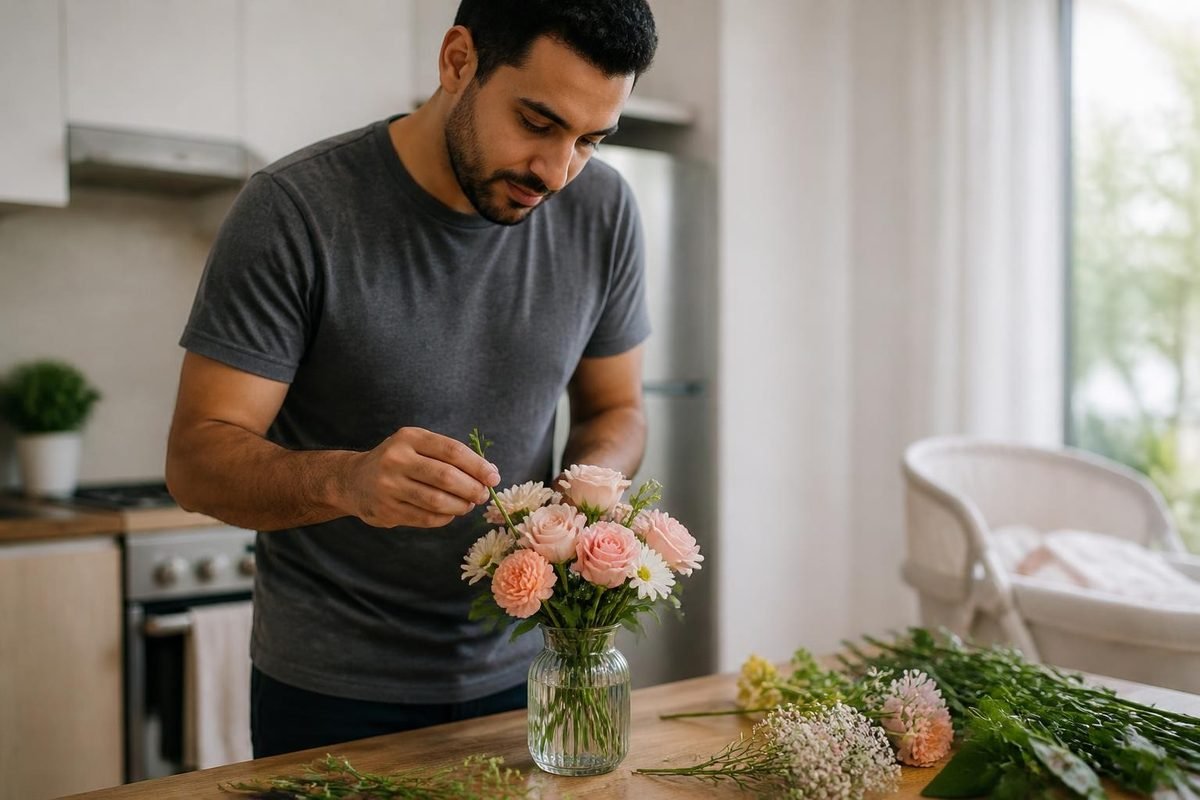
Roses, carnations and daisies are among the flowers commonly associated with gifts for new mothers. There is no single flower that was traditionally given to every new mother, and the meaning of a bouquet depends on its place, time and family customs.
Flowers often chosen for a new mother
Flowers have long been given to mark family occasions, but a flower's general meaning is not proof that it was historically reserved for childbirth. These familiar choices offer a useful starting point:
- Roses: Associated with love and affection, roses can express care for the mother as well as welcome for the baby.
- Carnations: These flowers have a connection with Mother's Day, particularly in the United States. That association is with mothers in general, not specifically with birth.
- Daisies: Often linked with innocence and simplicity, daisies are a straightforward choice for a baby welcome bouquet.
- Chrysanthemums: In Australia, chrysanthemums are commonly given on Mother's Day. They are not a flower exclusively associated with new mothers.
Color can add meaning, but there is no fixed code that every family follows. Pink and white are familiar choices for a new baby, while bright mixed flowers can be just as thoughtful.
What the traditions tell us
The clearest distinction is between a flower associated with motherhood and one documented as a customary gift after childbirth. Carnations, for example, became closely tied to Mother's Day in the United States through the work of Anna Jarvis, who promoted the holiday in honor of her mother.
That history does not mean carnations were the standard gift for every birth. Family celebrations vary, and records of ordinary gifts are often less clear than the histories of public holidays.
Other flowers may carry meanings such as love, innocence or good fortune in particular traditions. Those meanings can help explain a choice, but they should not be treated as universal rules. A family may value a flower because it grows in a relative's garden, not because it appears in a guide to symbolism.
Choosing a bouquet today
Start with the mother's preferences if you know them. A favorite flower or color can make the gift more personal than a choice based on symbolism alone. If you are unsure, a modest mixed bouquet is easy to enjoy without making a statement the family did not intend.
Consider where the flowers will go. Hospitals may have rules about flowers, and some units do not allow them, so check before sending an arrangement. At home, a small vase can be easier to place than a large display.
Avoid strongly scented flowers if the recipient is sensitive to fragrance. If there are pets at home, check the safety of each flower and the accompanying foliage. Lilies, for example, are particularly dangerous to cats.
Questions about flowers for new mothers
Were carnations traditionally given after a birth?
Carnations are strongly associated with Mother's Day, but that does not establish them as a universal traditional gift after childbirth.
Do flowers have to be pink or blue?
No. Choose colors the mother likes, or use a mix without tying the bouquet to the baby's gender.
Are white flowers a safe choice?
They can be, though white flowers have different associations across cultures. If you are unsure, ask someone close to the family.
Should I send flowers to the hospital or home?
Check hospital rules first. Sending them home may be simpler if the family is leaving soon or needs space to rest.
See also: flowers in art museums